Quick symptom checklist
You’re sitting in a drive-through line and the radio, A/C, and dash lights click off, then flicker back on while the engine is still running. That points to the alternator. Or you turn the key in the morning and the engine barely turns over — that points to the battery. Quick rule: trouble after sitting parked = battery; trouble while driving = alternator. Use this checklist to spot which one you’re dealing with:
Battery Clues (Storage Faults)
- The engine cranks very slowly or makes a clicking sound when you turn the key.
- Your battery reading is below 12V when the engine is turned off.
- The car has trouble starting specifically after sitting parked for a while.
- In extreme cases, a very low voltage can cause interior lights to strobe or door locks to rapidly cycle.
Alternator Clues (Charging Faults)
- The dashboard battery icon flickers or stays lit while the engine is running.
- Electronics, such as the radio or gauges, die or act erratic while the engine is still running.
- The car fails to restart immediately after you shut the engine off.
- Headlights or dash lights dim when the car is idling but brighten when you rev the engine.
Why the distinction matters
Understanding the difference helps you avoid buying a part you don’t need. The two components have very different jobs.
The battery is for storage. It holds chemical energy used to provide the high current needed to crank the engine. When a battery fails, it is usually due to sulfation, where hardened crystals insulate the internal plates and prevent the battery from holding a charge.
The alternator is for generation. It is a belt-driven unit that generates electricity to power your car’s electronics and recharges the battery once the engine is running. A healthy alternator should keep the voltage between 13.5V and 14.5V.
If the alternator fails, it might be due to a faulty diode or rectifier. This creates an “AC ripple,” which causes flickering lights and erratic electrical behavior that a simple old battery wouldn’t cause.
The safe diagnostic sequence (do this before buying)
Never replace your alternator before checking your battery. A weak or undercharged battery can make a perfectly good alternator look like it is failing. Do these three tests in order:
Stage 1: Static Test (Engine Off) Check the voltage at the battery terminals with the engine off. A healthy battery should read between 12.4V and 12.8V. If it is below 12.2V, it is weak or discharged. If it is below 11.9V, it likely needs replacing. Charge the battery fully before moving to the next step.
Watch the voltage while you crank the engine. On the standard cranking test, the voltage should stay at or above roughly 9.6V while the starter is turning. If it drops below 8.4V during the crank, the battery is likely dead.
Stage 3: Running Test (Engine On) Start the engine and check the voltage again. With the alternator working, the reading should jump to roughly 13.5–14.8V.
- The Load Test: Rev the engine to 1500–2000 RPM and turn on electrical items (like headlights or A/C). The voltage should stay above 13.5V. Skipping this step is a common reason people misdiagnose their cars.
- The AC Ripple Test: Set your multimeter to AC volts. At 1500–2000 RPM, a healthy alternator should show less than 0.1V AC. If you see more than 0.5V AC, your alternator’s rectifier diodes are likely failing.
Common misdiagnosis traps
Before you spend money on new parts, watch out for these four common mistakes:
- Corroded Cables: Loose or dirty battery cables can mimic a dead battery or a bad alternator. Clean and inspect your cable ends first.
- In-Car vs. Bench Testing: Many parts stores perform “in-car” load tests. These are not as thorough as a professional bench test and can miss real failures.
- The “Old School” Test: Never disconnect the battery cable while the engine is running to test the alternator. On modern cars, this sudden voltage spike can destroy your voltage regulator or damage your expensive ECU (the car’s computer).
- Smart-Charge Systems: Many modern vehicles use “smart-charge” or stop-start technology. These systems deliberately vary the voltage. Always check your owner’s manual before condemning a part based on a fixed voltage number.
What to buy if it’s the battery
If your tests show the battery is the problem, you need a replacement that matches your vehicle’s specific needs.
- Best Overall: The Bosch S4 096 is highly rated as a direct OEM replacement with a 74 Ah capacity and a 4-year guarantee.
- For High-Power Vehicles: If you drive a larger vehicle, look for something with more capacity, like the Yuasa YBX9000 (95 Ah).
- Pro Tip: Use a conductance tester to verify the fix. While voltage tells you what is currently in the battery, conductance tells you what the battery is actually capable of delivering.
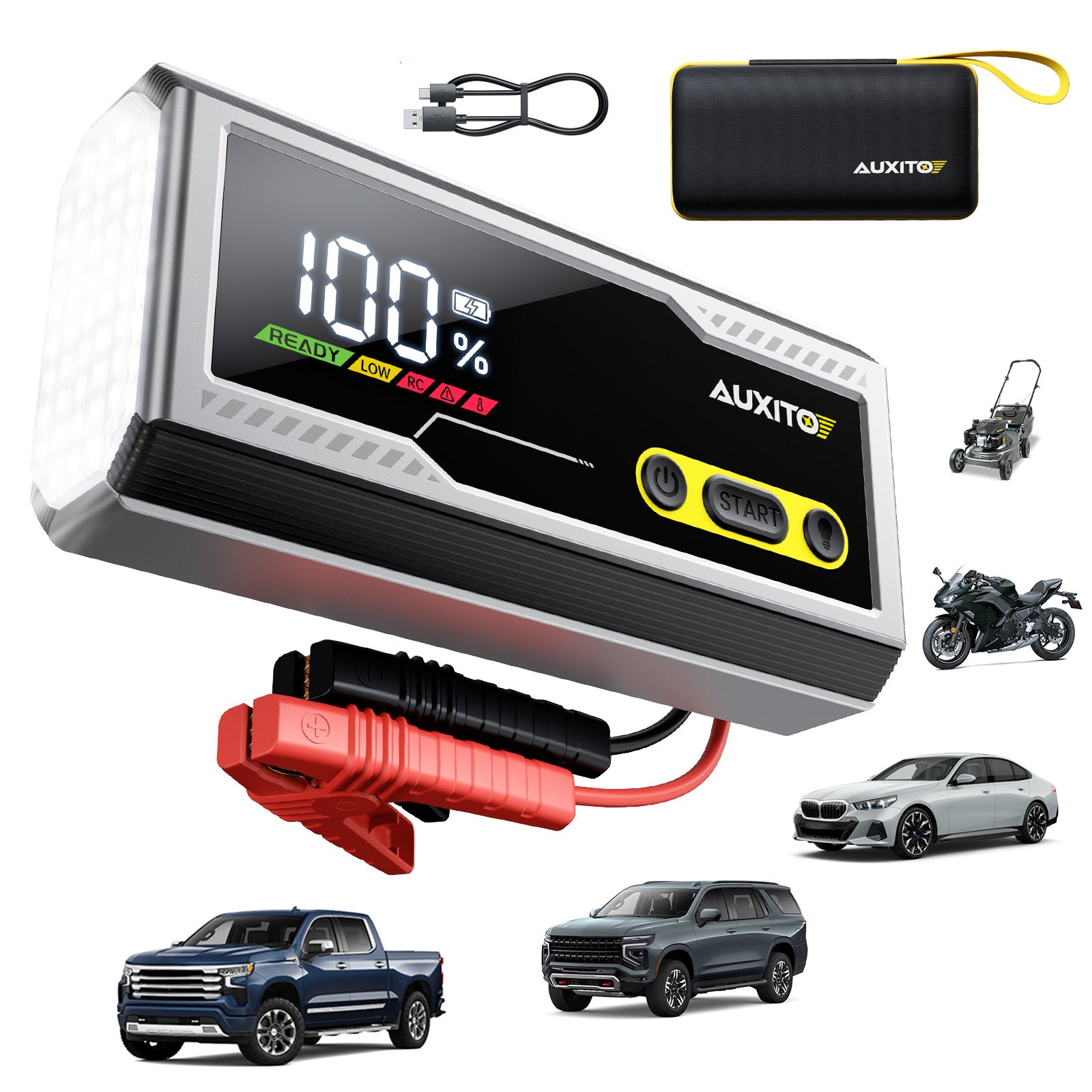
AUXITO T3 6000A Jump Starter, 12V Car Battery Jump Starter, Up to All Gas & 12L Diesel Engine with LED Display, Portable Jump Box with 3 Modes Flashlight and Jumper Cable, Storage Case
gearnudge.com
- Best for
- A reliable jump starter to get you moving while you decide on a replacement.
- Avoid if
- You need confirmed live price or guaranteed fit from this page.
- Evidence
- Listing and source evidence
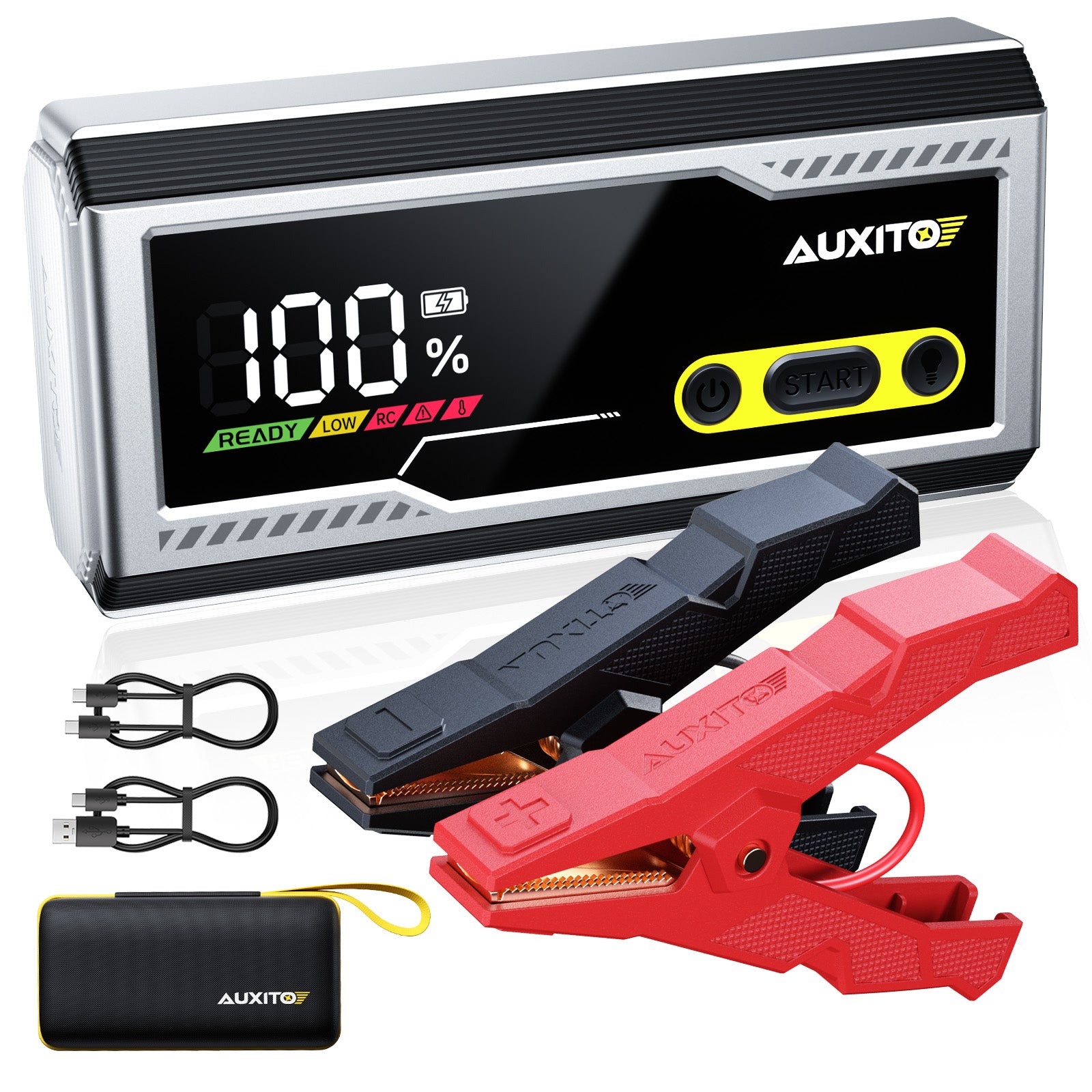
AUXITO T4 8000A Car Jump Starter, Portable 12V Jump Box for Gas & Diesel, Battery Booster Pack with Smart Clamps, Power Bank USB Port, LED Flashlight (SOS/Strobe), Large LCD, IP68 Water-Resistant
gearnudge.com
- Best for
- A powerful, water-resistant option for gas or diesel engines.
- Avoid if
- You need confirmed live price or guaranteed fit from this page.
- Evidence
- Listing and source evidence
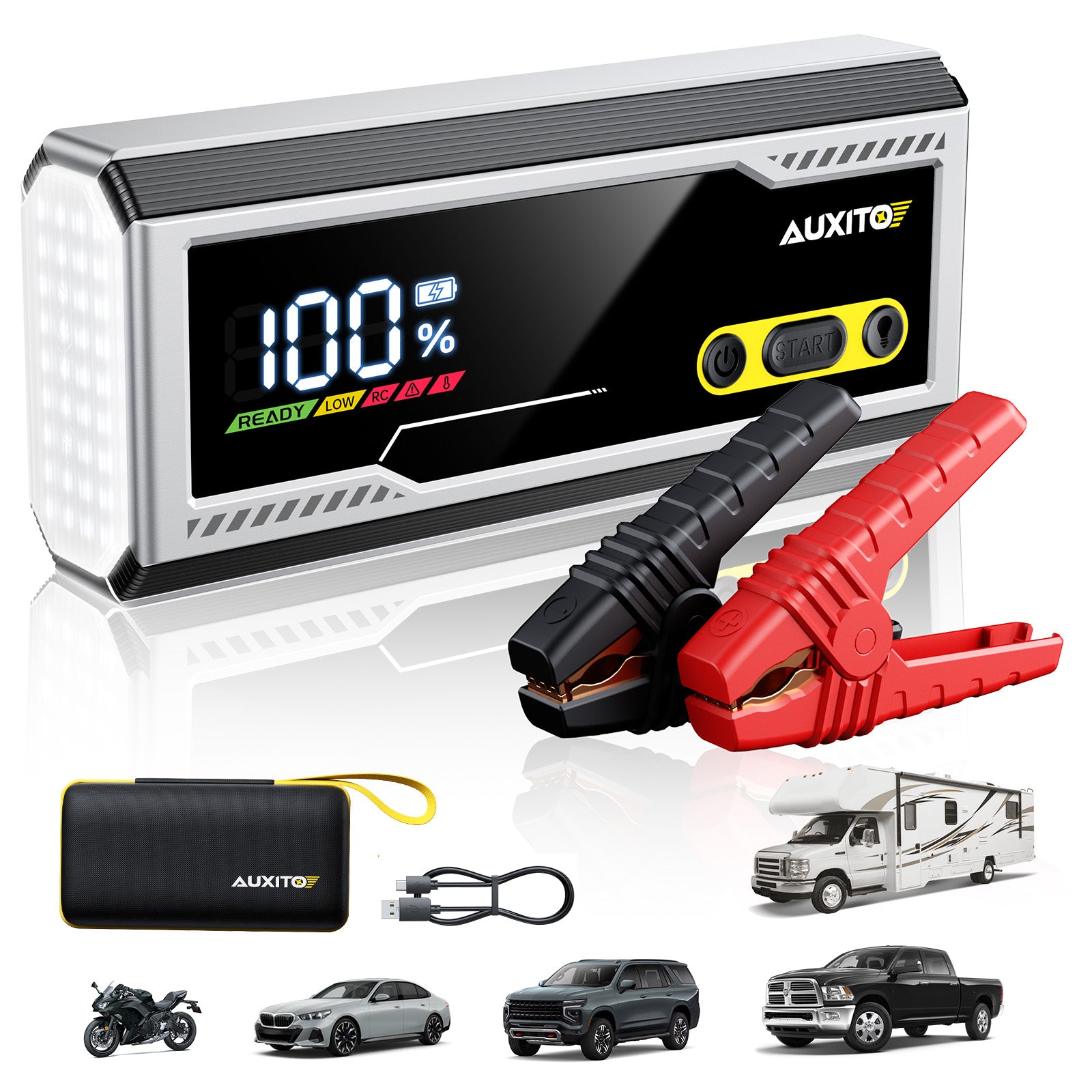
AUXITO T5 Portable 9500A Jump Starter, 12V Car Battery, Up to All Gas/All Diesel Engines
gearnudge.com
- Best for
- The highest power option for heavy-duty needs.
- Avoid if
- You need confirmed live price or guaranteed fit from this page.
- Evidence
- Listing and source evidence
What to buy if it’s the alternator
If the alternator is the issue, stick to proven brands. Avoid cheap, no-name units that use inferior bearings or brushes.
- Choose Established Brands: Bosch, Denso, ACDelco, or Remy are reliable choices with better warranties.
- Check the Specs: The replacement should meet or exceed your vehicle’s original amperage. If you have added aftermarket electronics, consider adding 15–25% more capacity.
- Match the Hardware: Ensure you match the pulley type (like a clutch or OAP pulley) and the connector plugs exactly.
- Value Option: A high-quality remanufactured unit that has undergone full-load “hot-soak” testing can offer great value compared to a brand-new unit.
What to buy if it’s connections or parasitic draw
If your voltage readings are inconsistent, the problem might be the “pipes” carrying the electricity rather than the source.
Run a voltage-drop test on both the positive and ground sides of the circuit. If you see a drop greater than 0.2V, you have excessive resistance in your wiring. This often happens because of corroded cable ends, which can cause an alternator to overheat and fail prematurely. Clean or replace these connections before buying any major components.
If you need an interim solution to keep you from being stranded, keep a portable jump starter in your trunk.
Compatibility & install checks before ordering
Before you click “buy,” perform these final checks:
- VIN-Match: Use your Vehicle Identification Number (VIN) to find the correct battery group size and CCA (Cold Cranking Amps) rating.
- Check the Handbook: If your car has a stop-start system, check your manual. These cars often require specific AGM or EFB battery types.
- Verify the Alternator: Match the amperage, plug connectors, and pulley type to your original equipment.
- Fix the Connections: During installation, inspect all grounds. A poor connection during install will lead to the new part failing much sooner than it should.
FAQ
Can I drive with the battery light on?
No. The light usually means your charging system is failing. Your car could die while you are driving, leaving you stranded.
Can I disconnect the battery cable to test the alternator?
No. Never use the old trick of pulling the battery cable loose while the engine is running to “test” the alternator. It can destroy your voltage regulator and ECU modules. Always test with the battery connected using a multimeter.
How long should a replacement last?
You should expect a quality battery to come with a 4-year guarantee and a good alternator to carry a 1–3 year warranty.
Why test the battery before the alternator?
A battery with a bad cell can make the alternator overcharge the remaining cells, which overheats the battery’s internal fluid and can damage the system. Always rule out the battery first.