Who this is for (and who should skip)
You walk out to your car in the morning and the battery is dead—again. If you own an older vehicle or don’t mind waiting 30 minutes to two hours for a modern car’s computers to fall asleep, you can find the culprit yourself by watching how much power the car pulls while parked.
Skip this if you need your car every single day and can’t wait around for it to fully shut down. On newer cars, a bunch of computers stay awake after you turn the key off, and they can take anywhere from 30 minutes to a couple of hours to finally go to sleep.
Be careful if you drive a recent vehicle with a lot of networked computers that all talk to each other. On these cars, pulling a fuse can accidentally wake up a sleeping module, making the test take way longer and giving you bad numbers.
To get an accurate reading, you have to trick the car into thinking everything is closed. Tape down the door, trunk, and hood switches so the car believes the doors are shut. If you have a smart key or fob, move it far away from the vehicle so it doesn’t keep the electronics awake.
How to choose your testing method
There are three main ways to hunt for a drain, and the right one depends on how new your car is and how much you want to mess with the wiring. By the end of this section you’ll know which method matches your vehicle and your comfort level.
- Clamp meter method: This is the most convenient. You clamp a tool around the negative battery cable to measure current without disconnecting anything. This avoids resetting the car’s computers or losing your radio settings.
- Series multimeter method: This is the old-school way. You disconnect the negative battery cable and place a multimeter in the “series” between the cable and the battery post. While it works well for older cars, it can reset modules on newer vehicles.
- Voltage-drop method: This is the professional standard for modern, computer-heavy cars. Instead of pulling fuses and breaking the circuit, you measure a tiny “millivolt” drop across the fuse itself. This allows you to find the problem without waking up the car’s electronics.
Product options — clamp meters for non-intrusive testing
If you want the easiest entry point, a clamp meter is your best bet. It lets you see the draw instantly without disturbing the car’s memory.
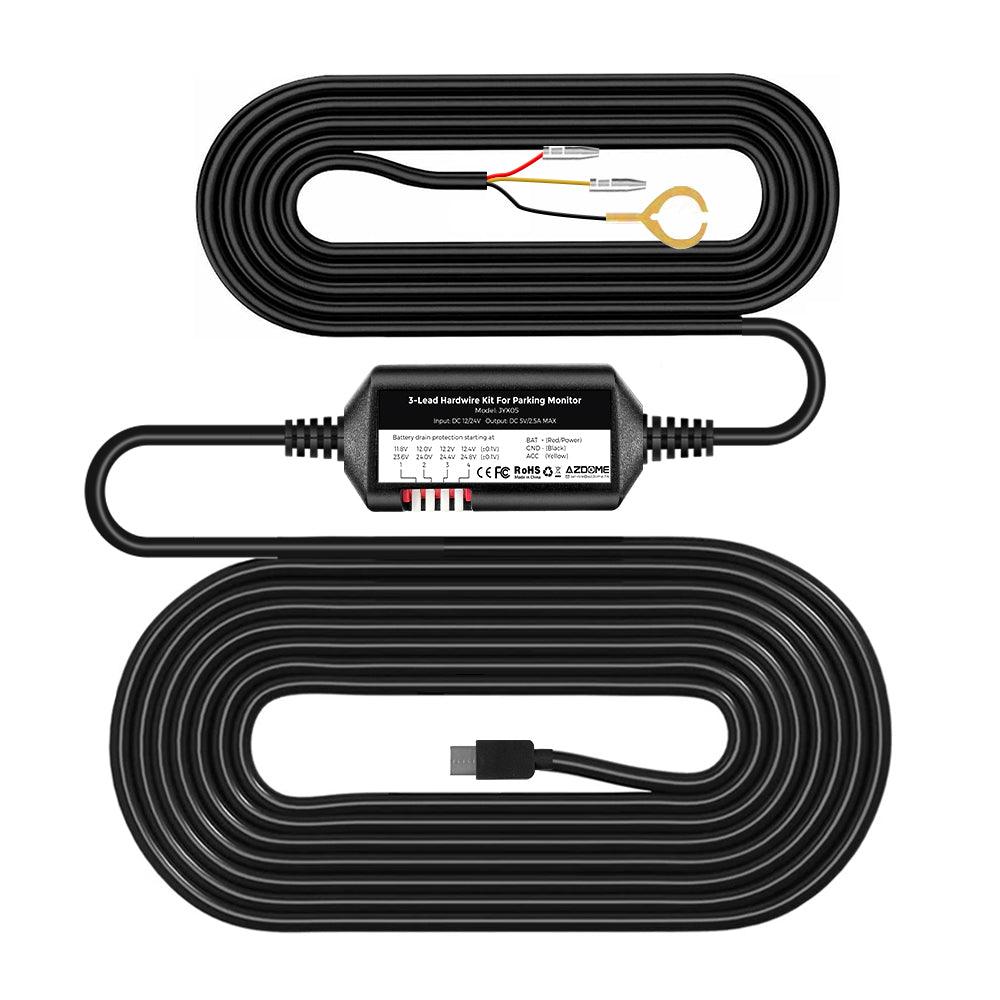
AZDOME JYX05 3-Lead Hardwire Kit | Type-C | 24H Parking Mode & Battery Protection
gearnudge.com
- Best for
- A budget-friendly option for monitoring power, though a dedicated meter is better for diagnosis.
- Avoid if
- You need confirmed live price or guaranteed fit from this page.
- Evidence
- Listing and source evidence
The UNI-T UT210e is a popular budget clamp meter, often around $50. Its 2A DC range reads down to 1 mA, which is the sensitivity you need to spot a small parasitic drain. In an owner write-up, clamping the negative battery cable and hitting the zero/REL button revealed a 120 mA draw and traced it to a faulty glove-box light in minutes. Forum regulars recommend it for occasional drain testing, but note it drifts at low amps—so you’ll hit the zero/REL button regularly—and it tops out at 100 A, meaning you can’t use it for starter-motor draw tests.
Prices in this guide are vendor listings as of 2026-08-10 and can change, so confirm the current price on the seller page before you buy.
Just keep in mind that because it is a budget tool, it can have some “drift” at low amps, so you will need to hit the “zero” or “REL” button regularly. Also, it has a 100A limit, which means you cannot use it to test the massive draw of a starter motor.
Product options — multimeters for series or voltage-drop testing
If you prefer the classic method or want to use the professional voltage-drop technique, you will need a high-quality multimeter.
For standard DIY and professional work, Innova 3320 and 3340 auto-ranging meters are common choices. When using these, if you see a reading over 50 mA, treat it as a suspect drain.
If you want to use the advanced voltage-drop method, you need a meter with 0.1 mV resolution and sharp probes to pierce through any oxidation on the fuse connections.
- The Pro Benchmark: The Fluke 87V Max is considered the top-tier professional choice.
- The Budget Value: An AstroAI 2000-count model is a good entry point.
- The DIY Sweet Spot: Most serious DIYers find that spending between $50 and $100 gets you much better accuracy and reliability.
Compatibility & setup checks before you buy
Before you start testing, you need to set the stage, or your results will be useless.
- Charge the battery: Make sure the battery is fully charged and healthy before you try to find a drain.
- Trick the switches: Use tape to hold down dome light, glove box, hood, and trunk switches. The car must believe every door is latched.
- Clear the area: Move your key fob far away from the vehicle.
- Wait for sleep: This is the most important part. Wait anywhere from 15 minutes to 2 hours for the modules to go to sleep. If you test too early, the reading will be much higher than it actually is.
- Protect your meter: Always plug your meter into the 10A DC port first. If you start on the tiny milliamp range and hit a large, unknown draw, you could blow the fuse inside your meter.
Avoid-if guidance
To save yourself time and frustration, avoid these common mistakes:
- Don’t test too early: If you don’t wait for the modules to enter sleep mode, you will get a false high reading.
- Don’t pull fuses on CAN-Bus cars: On newer vehicles, pulling a fuse can “wake up” a computer, making the testing process take forever. Use the voltage-drop method instead.
- Don’t start on the milliamp range: Always start on the higher 10A setting to protect your equipment.
- Don’t buy a low-resolution clamp meter: If the meter cannot resolve 1 mA, you won’t be able to see the small drains that are actually killing your battery.
FAQ
What is a normal amount of power draw?
It depends on the age of your car. For older vehicles, under 50 mA is normal. For newer vehicles with more electronics, 50–85 mA might be expected. Anything over 85 mA is generally considered a problem circuit, and over 400 mA is a very serious drain.
What if the drain disappears while I am testing?
Don't panic. It usually means a module "woke up" because you moved something or pulled a fuse. You need to reset the conditions, make sure the car is locked, and wait for the sleep cycle to happen all over again.
Which method should I use first?
Use a clamp meter for your first look. It is non-intrusive. If you find a drain and need to pinpoint exactly which fuse is responsible, use the voltage-drop method on modern cars.