Who this is for
It’s early morning, and the light bar on the truck ahead is flooding your cab. That commute-glare moment is the most common way auxiliary lights become someone else’s problem — and it’s the reason owners get stopped or fail inspections. The direct answer: on public roads, those lights need to be covered or turned off unless they’re aimed and wired to your state’s rules. By the end of this guide, you’ll know which setups can go on a street-legal vehicle and which are better left for off-road use.
Daily commuters often run into trouble with glare complaints or failing annual safety inspections if their light bars are uncovered or misaimed. If you drive an overland rig or an off-road vehicle, you need to worry about legal highway transport, which means using opaque covers and compliant wiring.
Truck and Jeep owners running light bars are the ones most likely to get pulled over: owners report being stopped for having off-road lights mounted but uncovered, even when they weren’t in use. Cheap uncertified bars are also a common reason vehicles fail inspections in states that check.
ADV motorcycle riders usually look for pod kits. These provide better visibility for mixed on-road and off-road riding while being easier to mount. Keep in mind that legal risks change depending on where you live — some states enforce rules through annual inspections, while others rely on officers pulling you over for glare.
Federal floor & state rules that dictate what you can buy
The direct answer: on paved roads, auxiliary lights are only safe to run if they’re covered, turned off, or legal under your state’s lighting rules. The federal lighting rule (FMVSS 108) sets the safety floor for replacement lamps — it requires that lamps illuminate the road without blinding others, so a cheap uncertified light bar can fail you at inspection even if it looks fine in your driveway. Your state’s laws then decide what you can actually buy and run on the street.
What you can legally run changes by state. For example:
- California: You are limited to four forward-facing lamps lit at once (like your headlamps plus your auxiliary lights). They also cap auxiliary driving lamps at two, mounted between 16 and 42 inches high. Fog lamps have different height requirements, and spotlamps are capped at 30 watts or 32 candlepower.
- Florida: If you mount lamps on your cowl or fender, they must be amber or white and must not cause glare.
- Minnesota: Your auxiliary lamps must be aimed so your upper beam reveals things 350 feet ahead and your lower beam reveals things 400 feet ahead.
- Oregon: All auxiliary lights must be mounted at or below 54 inches. Crucially, Oregon law requires all lighting equipment to meet Department of Transportation (DOT) standards.
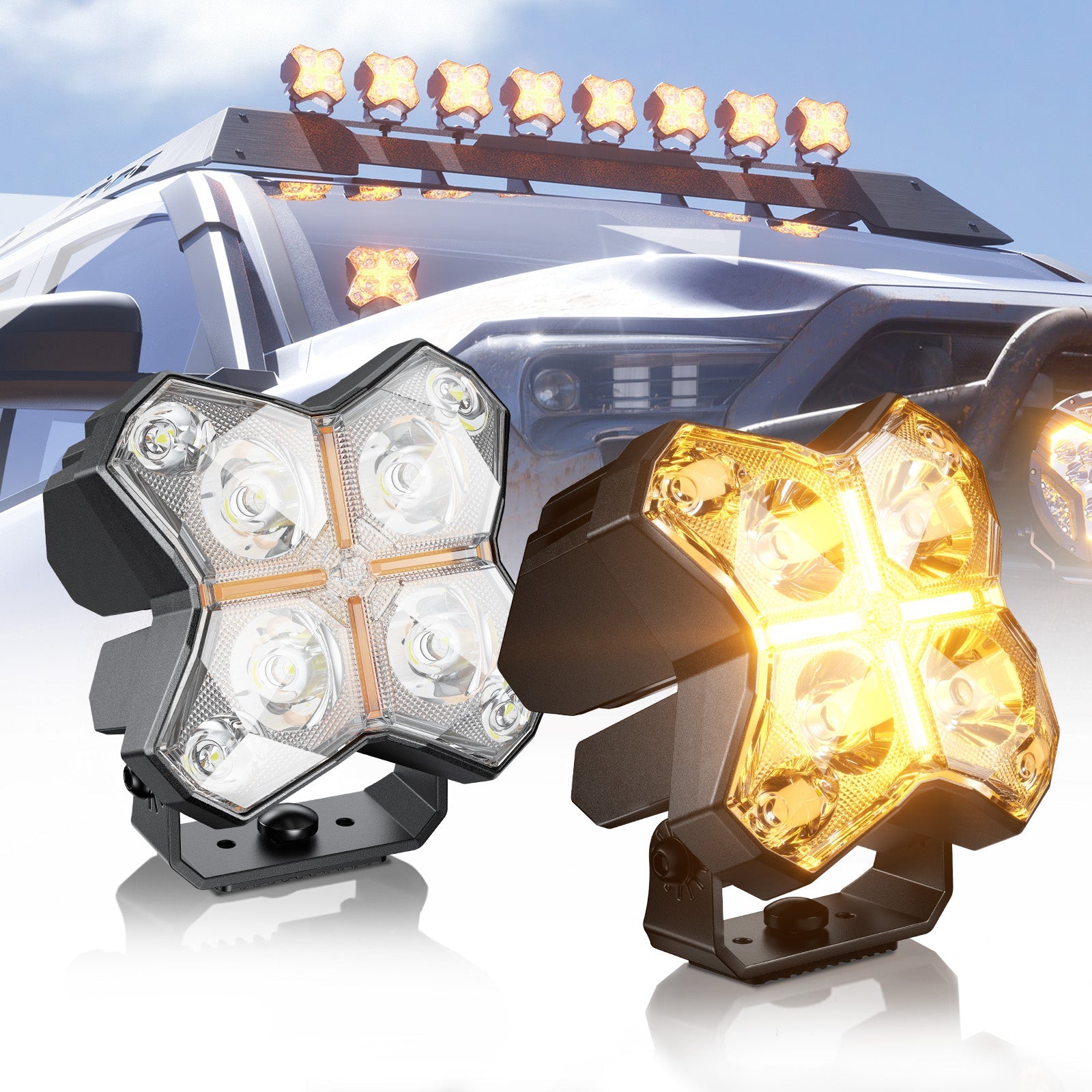
AUXITO X-Plore 1 Series | 4.5" Auxiliary Driving Lights Spot/Driving Beam + Amber DRL
gearnudge.com
- Best for
- A compact auxiliary driving light to compare once you know your state's rules.
- Avoid if
- You need confirmed live price or guaranteed fit from this page.
- Evidence
- Listing and source evidence
Product types — fog, driving, spot, and off-road pods/bars
Before you buy, you need to match the beam pattern to your actual needs.
Fog lamps are designed for low-speed use. They have a wide, bar-shaped beam with a sharp cutoff at the top, which helps prevent glare when driving in bad weather.
Driving lamps are meant to supplement your high beams. In places like California, you are not allowed to run these at the same time as your low beams.
Spotlamps focus on distance. They provide a narrow, long-range beam. Be careful with these, as some states limit how much power they can use and how far the beam can reach.
Off-road lamps are built for maximum output. Because they are often too bright for the street, you must use opaque covers (covers you cannot see through) and keep them turned off whenever you are on a highway.
Pod kits are a popular choice for riders. These kits package matched pairs of lights with the necessary wiring for a much easier installation.
Compatibility checks before you order
Don’t click “buy” until you check these four things:
- The Power Source: Most professional installation guides forbid connecting lights directly to the battery. You must use a fused takeoff to ensure the circuit is safe.
- Mounting Height: Check your local limits. California has specific windows for driving and fog lights, and Oregon caps everything at 54 inches.
- Beam Aim: Know your target. For instance, California requires fog lamp aim to be at least 4 inches below the lamp center at a distance of 25 feet.
- Lamp Count: Make sure you aren’t adding so many lights that you exceed your state’s limit for simultaneous use.
Enforcement reality — what owners actually experience
What do drivers actually face on the road? It is a mix of inconsistent stops and strict inspections.
Many owners report being pulled over for having off-road lights mounted on their vehicles, even if the lights are turned off. While some drivers say police often just give a warning, others find that light bars are a magnet for traffic stops.
If you drive a lifted Jeep or truck, you are more likely to deal with glare complaints from other commuters. In states with mandatory annual safety inspections, uncovered LED light bars are a common reason for failing. Some owners even find themselves disconnecting non-DOT-compliant bars entirely just to pass an inspection.
Recommended road-legal pod kits (with price caveats)
If you are an ADV or motorcycle rider looking for something reliable, two specific kits are frequently recommended by experts for their performance on and off the road.
Avoid-if guidance
Steer clear of these red flags to avoid fines and safety issues:
- Cheap, non-DOT bars: If they don’t have FMVSS or DOT certification, they likely won’t pass an inspection.
- Uncovered off-road lights: If you are using them on a daily driver, keep covers handy for the highway.
- Direct-to-battery wiring: This violates standard installation requirements. Always use a fuse.
- Misaligned beams: If your lights are shining into the eyes of oncoming drivers, you are asking for a stop.
FAQ
Do I have to remove my off-road lights on the highway?
No, you don't have to take them off. You just need to make sure they are covered with an opaque cover and turned off.
How should I prepare for a vehicle inspection?
Cover any off-road bars, verify that [your lights are aimed correctly](/car-lighting/aim-headlights-after-bulb-change/), ensure they have DOT certification, and make sure you haven't exceeded the legal number of lamps for your state.
Should I choose fog or driving beams?
Choose fog lamps if you want wide, low-speed coverage with controlled glare. Choose driving lamps if you want to supplement your high beams for better distance.
Where can I find my specific state's rules?
Check your state's official vehicle code. Common references include California Vehicle Code 24402–24411, Florida Statute 316.235, Minnesota Statute 169.52, and Oregon Statute 816.060.